
 By
By General elections in the Central African Republic (CAR) concluded peacefully on Sunday, with domestic and international observers reporting an orderly process and strong voter turnout across much of the country.
Polls closed at 6:00 p.m. local time without major incidents, according to preliminary assessments released on Monday by the Réseau Arc-en-Ciel (RAC), a domestic election monitoring group. The organisation said voting was largely calm, including in remote areas.
The process was “generally peaceful and well organised,” RAC said in a preliminary statement, adding that voters were able to cast their ballots without significant disruption.
About 2.4 million registered voters were eligible to participate in the presidential, legislative and local government elections, conducted at around 6,700 polling units nationwide. The National Elections Authority (A.N.E.) said collation of results was continuing and that provisional results would be announced on January 5, 2026.
International observer missions from the African Union (AU) and the European Union (EU) also reported no major security incidents during voting. The AU said election day passed in a “calm environment,” while noting that final assessments would depend on the post-election process.
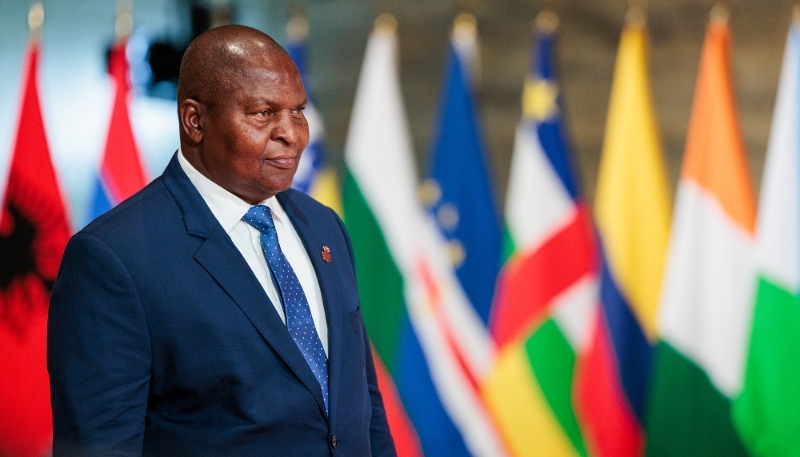
Seven candidates are contesting the presidency, including incumbent President Faustin-Archange Touadéra, who is seeking a third term under the banner of the ruling United Hearts Movement (MCU). Under CAR’s constitution, the president serves a seven-year term and must secure more than 50 per cent of the vote to win outright. A runoff election is scheduled for February 2026 if no candidate meets the threshold.
Touadéra faces challengers including former Prime Ministers Anicet-Georges Dologuélé of the Union for Central African Renewal (URCA) and Henri-Marie Dondra of UNIR, alongside four independent candidates. Political analysts say the incumbent entered the race as the frontrunner, citing his security backing and organisational advantage.
Voters also elected members of the National Assembly, CAR’s 140-seat unicameral legislature, whose members serve seven-year terms. A total of 685 candidates contested the parliamentary seats, nearly half running as independents, with the rest representing more than 40 political parties.
Analysts expect the ruling MCU to retain its parliamentary majority and possibly improve on the 61 seats it held in the previous legislature, though final outcomes will depend on official results. A second round of parliamentary elections, where required, is scheduled for April 5, 2026.


