
 By
By Nigeria’s evolving fiscal outlook reflects an administration intent on reform, consolidation and long-term stability. From the passage of the ₦43.56 trillion 2024 budget to the ₦48 trillion 2025 Appropriation Act, and now the presentation of the ₦58.18 trillion 2026 budget, President Bola Ahmed Tinubu has steadily expanded national expenditure in response to economic realities, inflationary pressures and ambitious reform goals.
The 2024 budget marked a critical turning point, following the removal of fuel subsidies and exchange rate unification. It signaled a willingness to confront deep-rooted structural challenges, prioritising security, infrastructure, social protection and economic stabilization. The 2025 budget, increased to ₦48 trillion, sought to consolidate these reforms amid rising debt servicing costs and the urgent need to sustain capital investment.
With the presentation of the ₦58.18 trillion 2026 Appropriation Bill titled “Budget of Consolidation, Renewed Resilience and Shared Prosperity”the Tinubu administration is positioning itself to translate reforms into tangible outcomes. The budget aims to consolidate economic gains, strengthen national resilience and ensure inclusive growth across key sectors.
lawmakers, Observers Applaud End to Overlapping Budgets.
Beyond its size, the 2026 budget has drawn attention for its proposed termination of overlapping fiscal cycles—a long-standing issue blamed for inefficiency, weak planning and poor implementation. Lawmakers and policy observers have described this reform as a major step toward fiscal discipline and effective governance.
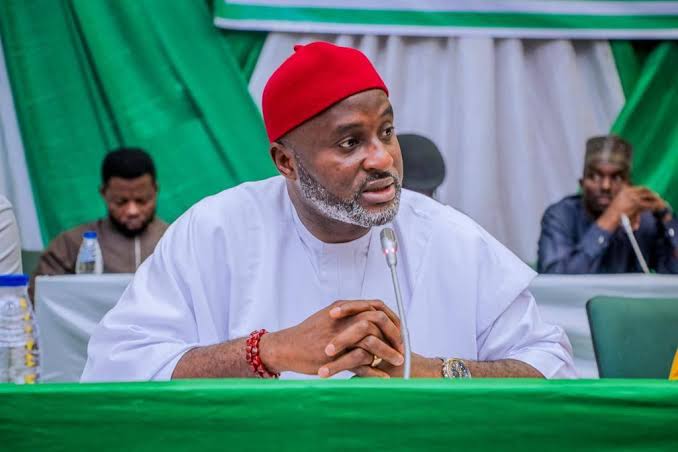
“The key issue for us is stopping budget overlapping. If by March we can end the situation where two or three budgets are running at the same time, it will show preparedness and direction,” he said, noting that funding multiple budgets simultaneously often breeds confusion and inefficiency.
He stressed that allocations of over ₦5.41 trillion for security and more than ₦3 trillion for data and related services would only yield results within a clear, single-budget framework.
Similarly, Hon. Eze Nwachukwu Eze Chairman of the House Committee on Banking Institutions, described the budget as a reflection of experience and policy clarity.

“This is a president who understands governance from the ground up. Ending overlapping budgets by March 31 shows clear direction,” Eze said, adding that the focus on security, education and infrastructure aligns with Nigeria’s most urgent needs.
Hon. Billy Osawaru also welcomed the emphasis on security, describing the over ₦5.41 trillion allocation as a strong signal of commitment.
“It is encouraging that security tops the budget, followed by infrastructure, education, healthcare and social services. The National Assembly is ready to work with the Executive to consolidate the gains already made,” he said.
On implementation timelines, Osawaru expressed confidence that the March 31 deadline is achievable. “All outstanding obligations for 2024 and 2025 are expected to be concluded so that 2026 runs as a single, focused budget from April to December,” he explained, while acknowledging concerns over late presentation but noting constitutional compliance

Hon. Adamu Tanko described the planned transition to a single budget cycle as a defining shift.
“By the end of March 2026, Nigeria should witness a streamlined budget process. That alone is a major breakthrough and the hallmark of this budget,” he said, adding that the President has assured lawmakers that previous obligations would be cleared before full implementation begins.

Lawmakers admitted that enforcement and oversight remain recurring challenges but pledged stronger scrutiny of Ministries, Departments and Agencies (MDAs).“Proper oversight is the biggest tool of parliament. Committees of the 10th Assembly are being challenged to ensure full implementation of the Appropriation Act,” a lawmaker said.
Independent observer Captain Dr. Seun Cole also welcomed the budget’s focus on security and infrastructure, noting its alignment with global best practices.

“In most developed countries, defence and security come first. If your house is not secure, development cannot thrive,” he said, adding that accountability mechanisms already exist but must be strengthened.
While the rising size of Nigeria’s budgets underscores bold ambition, their true test lies in execution. The proposed end to overlapping budgets presents an opportunity to restore coherence to fiscal planning and improve outcomes. As Nigeria moves from reform to consolidation, disciplined implementation, transparent oversight and effective revenue mobilisation will determine whether the promise of “shared prosperity” becomes a lived reality for Nigerians rather than a recurring fiscal aspiration.


