 By
By Nigeria’s economic growth faces significant risk as several ministries recorded zero or near-zero capital budget releases in 2025, despite massive appropriations approved by the National Assembly, experts have warned.
Economists and public finance analysts who spoke to Pulsewire described the situation as a full-blown budget execution crisis, warning that it could cripple infrastructure delivery, weaken public services, and slow economic growth at a time of mounting fiscal pressure, rising debt-servicing costs, and persistent inflation.
Findings by pulsewireng indicate that the challenge cuts across key sectors, including health, interior, security, transportation, marine and blue economy, housing, and women affairs where capital allocations were largely not backed by actual cash releases throughout the 2025 fiscal year.
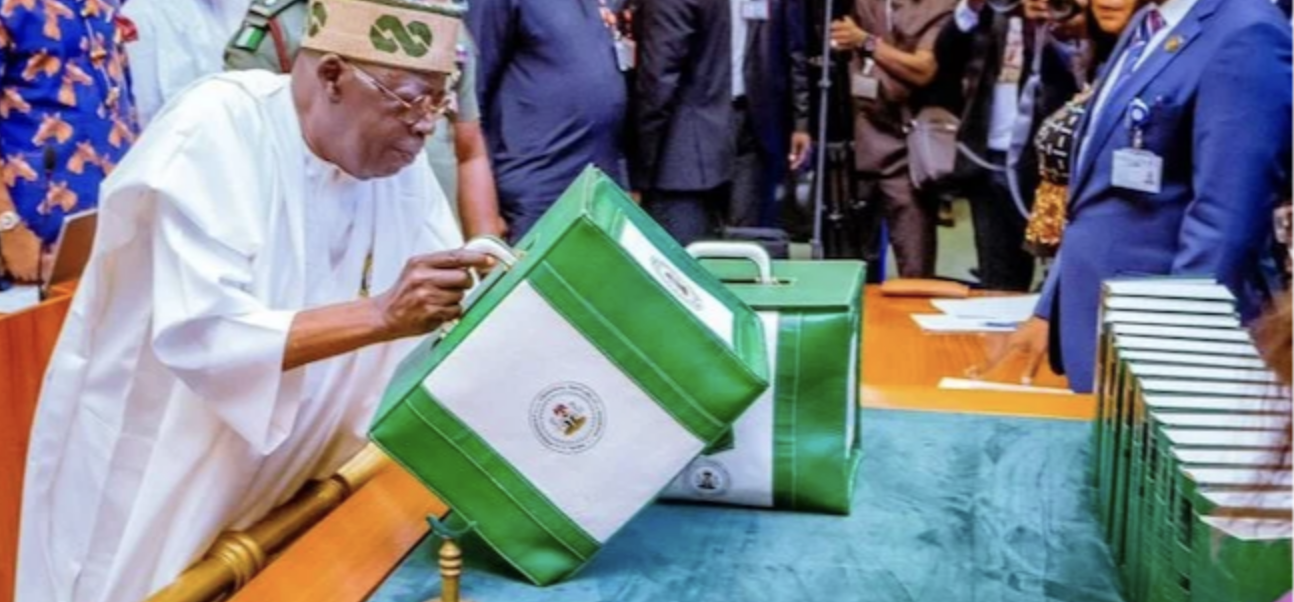
The National Assembly had approved a total budget of N57.1 trillion for 2025, comprising N43.5 trillion for capital expenditure and N13 trillion for recurrent spending.
The budget included several ambitious projects, such as the construction of 20,000 homes under the Renewed Hope Housing Agenda and major ICT initiatives. It also featured 3,573 constituency projects valued at N653.19 billion and 1,972 senatorial projects worth N444.04 billion.
However, disclosures during recent budget defence sessions at the National Assembly revealed that poor or non-release of funds to Ministries, Departments and Agencies (MDAs) severely limited their ability to execute planned projects.
The Accountant-General of the Federation, Shamseldeen Ogunjimi, who appeared before the Senate Committee on Finance on February 12, attributed the situation to indiscriminate contract awards by MDAs without confirmed funding.
“As the Accountant-General, my office can only disburse funds when they are available. We must have the funds before any release can be made,” he said, adding that the government no longer relies on “Ways and Means” financing due to its economic implications.
Key Ministries Hit by Funding Shortfalls
Several ministries recorded alarming shortfalls:
- The Ministry of Health and Social Welfare received just N36 million out of its N218 billion capital allocation—only 0.0165 percent.
- The Ministry of Interior reportedly received zero capital releases for both 2024 and 2025, leaving agencies like the Nigeria Immigration Service and Nigerian Correctional Service unable to upgrade infrastructure.
- The Ministry of Transportation received only N2.57 billion out of N256.73 billion—about one percent.
- The Ministry of Women Affairs got N394.8 million out of N89.8 billion.
- The Ministry of Marine and Blue Economy received N202 million out of N3.53 billion (1.7 percent).
- The Ministry of Housing recorded no capital releases, although about N23 billion in Authority to Incur (AIE) was issued late in December.
Analysts say while Nigeria’s budgets often feature ambitious capital spending, implementation has consistently lagged. However, stakeholders warn that the 2025 performance marks one of the worst in recent history, especially as the 2026 budget is already underway.
In late 2025, the federal government directed MDAs to roll over 70 percent of their capital budgets into 2026 to align with urgent national priorities.
President Bola Tinubu had also proposed a N43.56 trillion Appropriation (Repeal and Re-enactment) Bill to harmonise the 2024 and 2025 budgets, aiming to streamline fiscal operations and extend implementation timelines to March 2026.
Experts Warn of Economic Fallout
Economists say the implications are severe.
Professor Ndubisi Nwokoma described the situation as “budgeting without substance,” warning that development cannot occur without actual funding.
“There is no value added to the economy when budgets exist only on paper. Without financing, development cannot happen,” he said, stressing that access to finance remains central to economic growth globally.
He also pointed to rising borrowing levels, high cost of governance, and weak public financial management as key challenges undermining effective budget implementation.
Lawal Wasiu Omotayo of Al-Hikmah University noted that underfunded MDAs translate directly to poor service delivery.
“Government presence is felt through these institutions. When they are not funded, the impact is immediate on citizens,” he said, describing the situation as a failure of oversight and regulatory systems.
He called for improved transparency, reduced bureaucracy, and stronger institutional coordination.
Similarly, Professor Muftau Ijaiya of the University of Ilorin advocated a reduction in the cost of governance, arguing that excessive spending on non-essential areas limits funds available for development.
Dr. Paul Alaje, Senior Partner at SPM Professionals, warned that continued budget rollovers would stall national progress.
“If we do not invest adequately in critical sectors, development will be stunted. Infrastructure, jobs, and industrial growth all depend on capital expenditure,” he said.
Structural Inefficiencies Persist
Dr. Umar Yakubu, Executive Director of the Center for Fiscal Transparency and Public Integrity, blamed systemic inefficiencies within governance structures.
According to him, some revenue-generating agencies retain large funds, while critical ministries like health, agriculture, and education remain underfunded.
“This imbalance reflects a system built on inefficiency, where key development sectors are left at the mercy of limited releases,” he said.
Civil society groups also warned that failure to fund capital budgets undermines accountability and raises concerns about transparency in public spending.
As Nigeria navigates fiscal constraints and rising economic pressures, stakeholders insist that bridging the gap between budget approvals and actual releases will be critical to sustaining growth and delivering meaningful development outcomes.


