 By
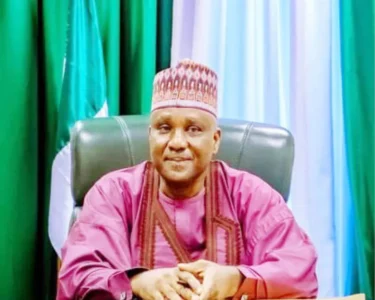
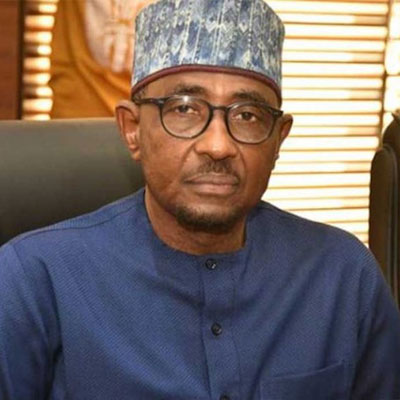
By The Chief Executive Officer of the Nigerian Midstream and Downstream Petroleum Regulatory Authority (NMDPRA), Engr. Farouk Ahmed, has denied allegations that he illegally funded his children’s foreign education, insisting that the claims are false, misleading, and aimed at undermining ongoing reforms in Nigeria’s petroleum downstream sector.
In a statement issued on Monday, Ahmed described reports alleging that he spent about $5 million on his children’s secondary education in Switzerland as “factually inaccurate,” stressing that the expenses were covered through a combination of merit-based scholarships, family education trust funds, and long-term personal savings.
Ahmed disclosed that three of his four children benefited from merit-based scholarships covering between 40 and 65 per cent of tuition fees, while additional support came from education trust funds established by his late father before his death in 2018.
He added that his annual remuneration of about ₦48 million, including allowances as NMDPRA chief executive, is publicly available in the Authority’s audited financial reports.
According to him, all income sources, investments, and major expenditures have been declared annually to the Code of Conduct Bureau (CCB) since he joined public service in 1991.
Ahmed said he has authorised all foreign institutions attended by his children to release relevant financial records to authorised Nigerian government investigators, expressing confidence that the documents would disprove the allegations.
He also dismissed insinuations that foreign schools would accept illegitimate funds, noting that such institutions operate under strict financial due-diligence standards.
He linked the resurgence of the allegations to recent regulatory actions by the NMDPRA, including stricter enforcement of fuel quality standards, exposure of substandard petroleum products, tighter licensing requirements, and the implementation of transparent pricing mechanisms.
noting that criticisms of the Authority’s Q1 2026 petroleum import licensing approvals, described in some quarters as “economic sabotage,” ignore the NMDPRA’s legal responsibilities under Section 7 of the Petroleum Industry Act (PIA).
According to him, the law mandates the Authority to ensure fuel availability and prevent scarcity whenever domestic supply is insufficient.
Defends Import Licensing Policy
Ahmed warned that reliance on a single-source fuel supply model poses significant risks to national energy security, adding that responsible regulation requires diversification to prevent shortages.
Since 2021, he said, the NMDPRA has published monthly fuel supply reports, launched public data portals on pricing and licensing, improved supply chain monitoring, and introduced depot-to-retail tracking to curb fuel diversion.
Invites EFCC, CCB, National Assembly Probe
The NMDPRA chief formally invited the Economic and Financial Crimes Commission (EFCC) to examine his financial transactions and sources of income, while urging the Code of Conduct Bureau to review all his asset declarations since 1991.
He also called on the National Assembly to exercise its oversight powers over any allegations of regulatory compromise during his tenure.
Ahmed pledged full cooperation with any investigation, including providing documents and testifying under oath, provided the process remains impartial and free from commercial influence.
‘I Will Not Be Intimidated’
The NMDPRA boss said he accepted the leadership role to implement long-overdue reforms in Nigeria’s petroleum sector, acknowledging that transparency and regulatory independence often attract resistance.
He vowed not to bow to pressure or grant preferential treatment to any company or individual, regardless of economic power or media influence.