
 By
By Two vessels have successfully navigated the Strait of Hormuz after Iran signalled a conditional reopening of the strategic waterway under a newly announced ceasefire arrangement.
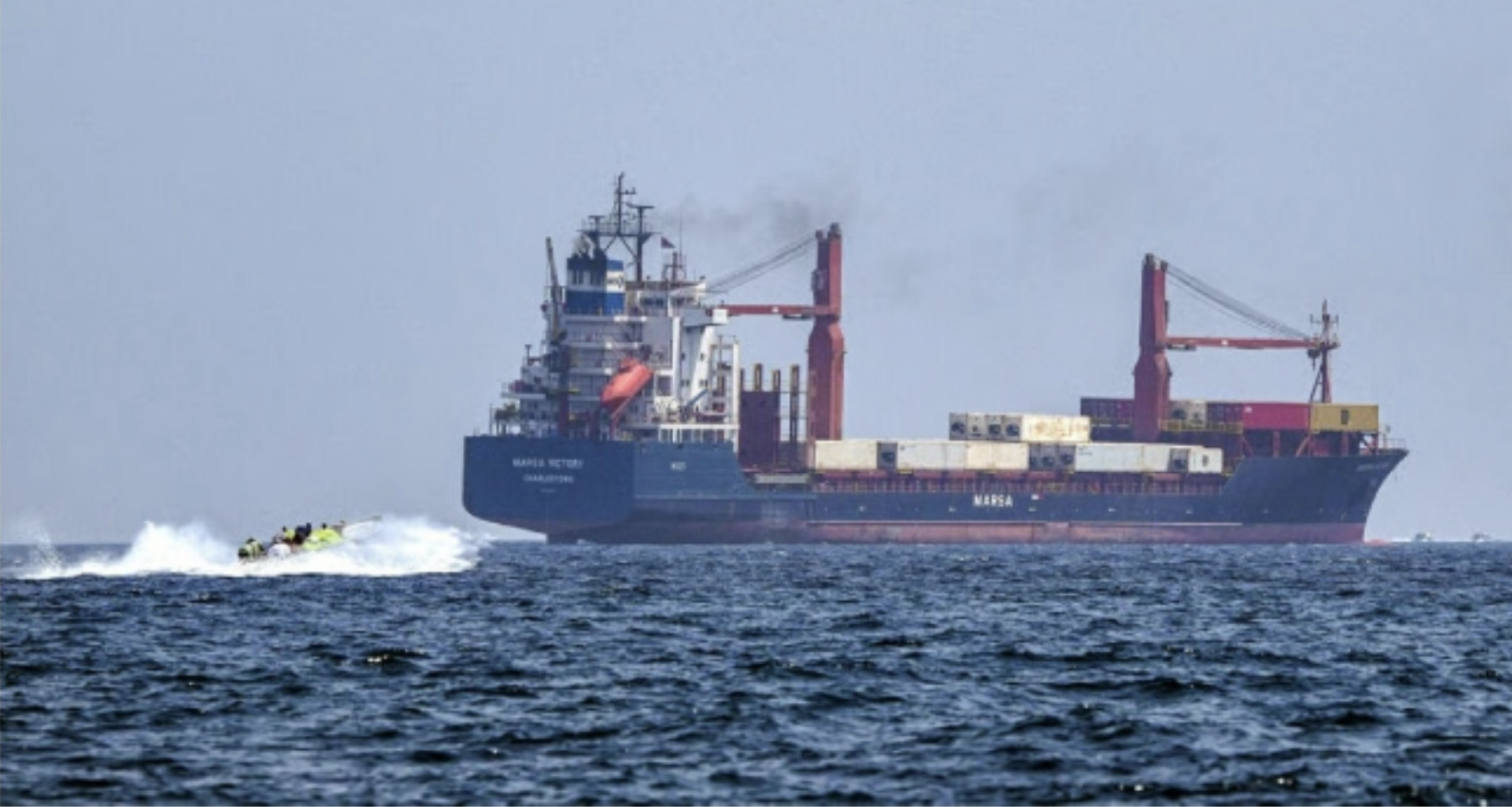
According to maritime tracking platform MarineTraffic, the Greek-owned bulk carrier NJ Earth crossed the strait at approximately 08:44 UTC. Earlier, the Liberia-flagged vessel Daytona Beach completed its transit at about 06:59 UTC, shortly after departing from Bandar Abbas.
The development comes after the United States and Iran reached a temporary two-week ceasefire agreement, effective overnight between Tuesday and Wednesday. As part of the arrangement, Iran indicated that vessel movement through the strait would resume under strict coordination with its armed forces.
Cautious Optimism Over Resumption of Traffic
Maritime analysts have urged caution in interpreting the initial crossings. An analyst with Kpler, Ana Subasic, noted that while the movement of NJ Earth could signal a gradual return to activity, it remains unclear whether it reflects a broader reopening or an isolated, pre-approved passage.
Tracking data showed that the vessel maintained an active transponder signal while navigating an Iran-approved route close to Larak Island — a corridor commonly used by ships in recent weeks under heightened restrictions.
The final destination of the vessel has not yet been confirmed.
Shipping Industry Watching Closely
Industry stakeholders are monitoring the situation closely as shipping companies weigh the risks of resuming operations in the region. Reports indicate that several shipowners and charterers are preparing to move vessels that have been stranded in the Gulf amid the disruption.
Shipping publication Lloyd’s List estimates that approximately 800 vessels are currently awaiting clearance or safe passage within the Gulf region.
Sharp Decline in Maritime Activity
Tensions in the region had significantly disrupted maritime traffic after Iran imposed restrictions in response to military actions involving the United States and Israel earlier this year.
Data from Kpler shows that between March 1 and April 7, only 307 commodity-carrying vessels passed through the strait — representing a steep drop of about 95 percent compared to normal traffic levels.
Strategic Importance of the Strait
The Strait of Hormuz remains one of the world’s most critical energy corridors, with roughly 20 percent of global crude oil and liquefied natural gas (LNG) shipments passing through the route under normal conditions.