 By
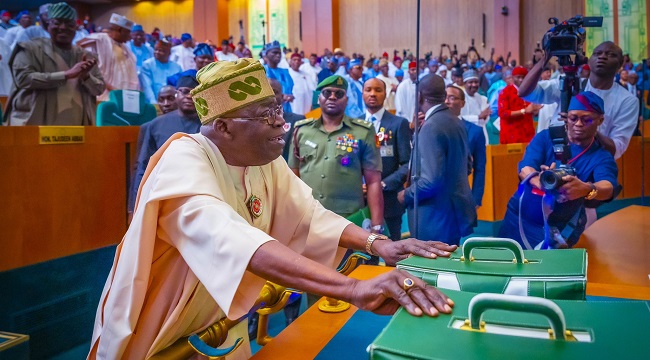
By President Bola Ahmed Tinubu has requested the approval of the National Assembly to increase the 2026 Appropriation Bill by ₦9 trillion, raising the proposed budget from ₦58.4 trillion to ₦67.4 trillion.
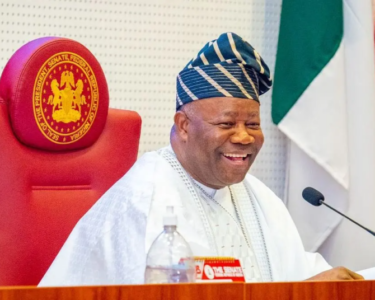
The request was contained in a letter read during Tuesday’s plenary by Senate President Godswill Akpabio.
According to the President, the proposed adjustment is aimed at enhancing fiscal transparency and ensuring the smooth implementation of key government programmes.
Tinubu explained that the increase is intended to address outstanding financial obligations carried over from previous budgets, ensuring they do not disrupt the execution of the 2026 fiscal plan.
He further noted that the proposal seeks to incorporate existing government liabilities into a more structured fiscal framework, while also making provision for selected strategic and priority projects. The adjustment, he added, is designed to maintain macroeconomic stability and ease pressure on the domestic financial system.
The President had earlier presented the 2026 budget proposal—initially valued at ₦58.18 trillion—to the National Assembly in December. The budget, themed “Budget of Consolidation, Renewed Resilience and Shared Prosperity,” allocates ₦5.41 trillion to defence and security, representing about 9.3 percent of total expenditure.
Tinubu emphasized that national security remains a critical foundation for economic growth, noting that investment cannot thrive in an insecure environment.
He described the 2026 budget as being guided by realism, fiscal discipline, and a growth-oriented outlook. Key projections include total revenue of ₦34.33 trillion and overall expenditure of ₦58.18 trillion, with ₦15.25 trillion earmarked for recurrent (non-debt) spending and ₦26.08 trillion for capital projects.
The budget also projects a deficit of ₦23.85 trillion, equivalent to 4.28 percent of Nigeria’s Gross Domestic Product (GDP), in line with the administration’s fiscal strategy.
Highlighting the broader economic framework, Tinubu stated that the 2026–2028 Medium-Term Expenditure Framework and Fiscal Strategy Paper is based on a conservative oil benchmark of $64.85 per barrel, daily crude production of 1.84 million barrels, and an exchange rate of ₦1,400 to the US dollar.
The President reaffirmed his administration’s commitment to fiscal sustainability, transparency in public debt, and prudent management of national resources.