 By
By Petrol and diesel prices have risen sharply over the past two weeks, driven by higher global oil prices amid the ongoing conflict involving Iran.
According to data from the RAC, diesel prices have increased by an average of 18 pence per litre, rising from 142.4p to 160.3p since the United States and Israel launched strikes on Iran at the end of February.
The 13 percent increase puts diesel at its highest level since November 2023.
Petrol prices have also climbed by about seven percent over the same period, rising from 132.8p to 141.5p per litre — their highest level since August 2024.
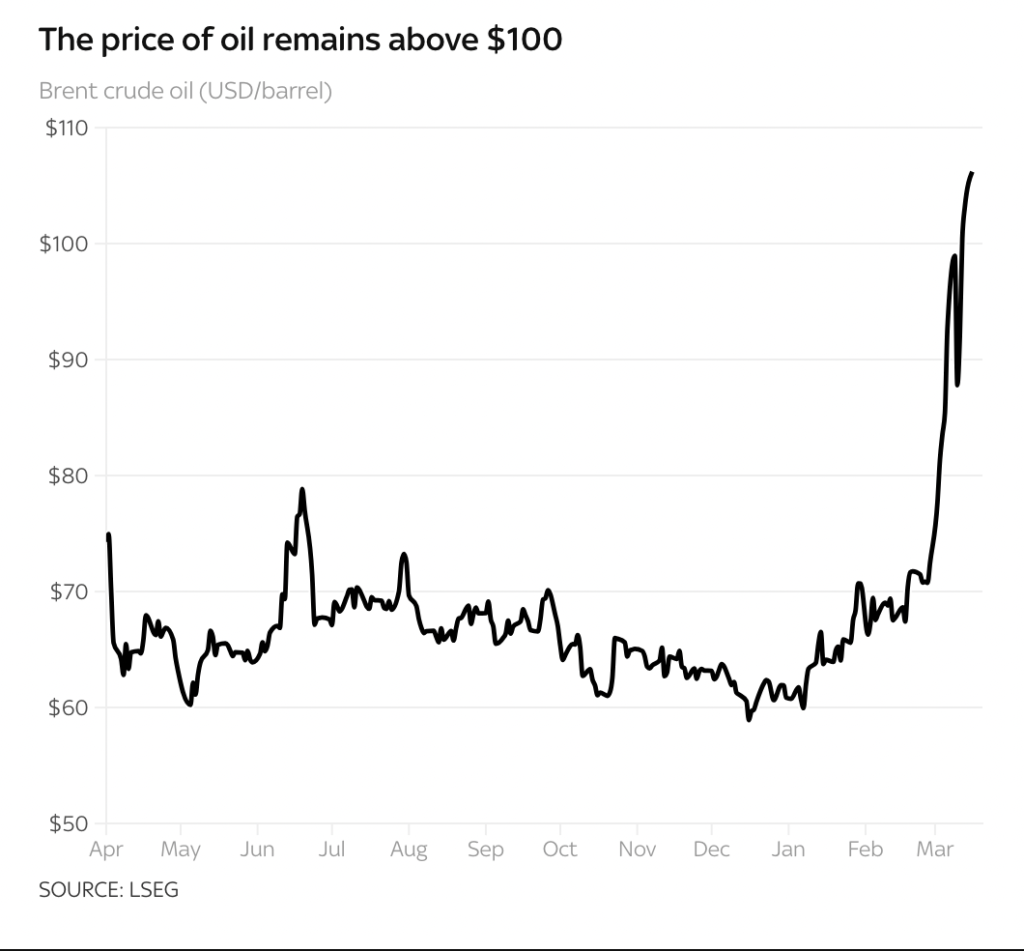
Global oil prices, which significantly influence wholesale fuel costs, have exceeded $100 per barrel for the first time since 2022 due to the conflict.
What Makes Up Fuel Prices?
While crude oil prices are a major factor, they are not the only determinant of what consumers pay at the pump.
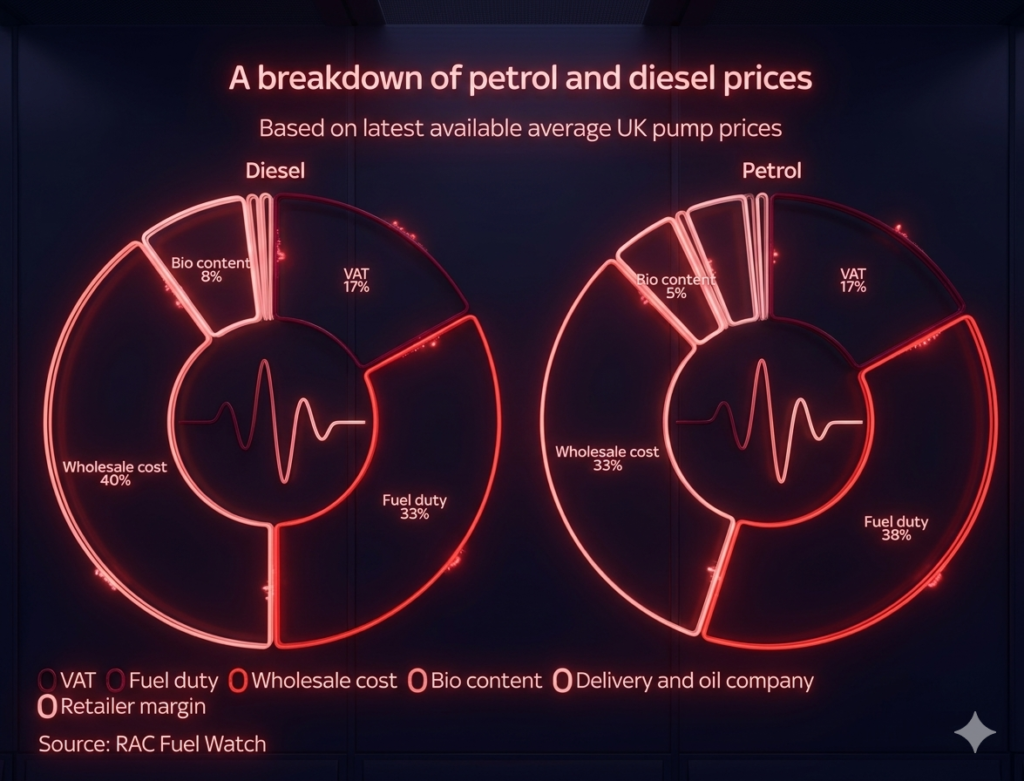
At least 50 percent of the price of petrol and diesel is made up of taxes, including Value Added Tax (VAT) and fuel duty.
-
VAT accounts for about 17 percent of the pump price.
-
Fuel duty contributes around 38 percent for petrol and 33 percent for diesel.
The cost of wholesale fuel represents about 33 percent of petrol prices and 40 percent of diesel prices.
Other components include:
-
Retailer margins (profit made per litre sold)
-
Distribution and delivery costs
-
Bio-content costs, linked to making fuel more environmentally friendly
Taxes Involved and Government RevenueFuel Duty and Government Revenue
Fuel duty on standard petrol and diesel currently stands at 52.95p per litre.
This includes a temporary 5p reduction introduced in 2022 following the Russia-Ukraine War, which has since been extended.
The government plans to gradually reverse the cut starting from August, with duty expected to rise in phases and fully return to previous levels by March 2027.
At current rates, fuel duty generates approximately £24 billion annually for the government, according to the Office for Budget Responsibility (OBR).
This represents about 1.9 percent of total government revenue, equivalent to roughly £835 per household.
The OBR projects that fuel duty will generate £24.2 billion in the 2026/27 fiscal year, rising to £26.2 billion the following year.
Why Is It Controversial?
Rising fuel prices have sparked concerns over potential profiteering by retailers, with the government warning against unjustified price increases.
Chancellor Rachel Reeves has urged regulators to clamp down on what she described as “rip-off” pricing.
However, critics have called on the government to delay the planned increase in fuel duty to ease the burden on consumers.
Edmund King, president of the Automobile Association (AA), warned that rising diesel costs could drive inflation.
“As most goods and services are transported by diesel vehicles, higher fuel prices will inevitably lead to increased costs for consumers,” he said.
He urged the government to postpone the phased reintroduction of the 5p fuel duty cut to provide relief for households.
Energy Secretary Ed Miliband indicated that the government may still review its plans, noting uncertainty over how long the Middle East conflict will last.
“We don’t know how long this conflict will continue, and with several months to go, we will have to assess the situation as it evolves,” he told the BBC.


