
 By
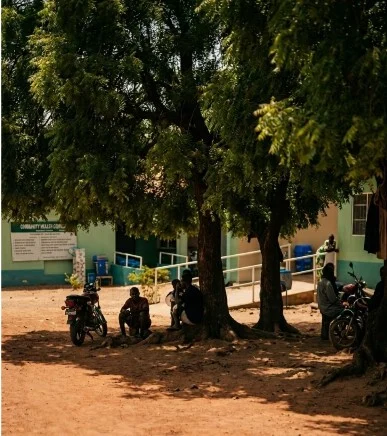
By The collapse of the Tuberculosis and Leprosy Health Centre in Narayi, Chikun Local Government Area of Kaduna State, has forced tuberculosis patients into open-air treatment at a nearby primary health facility, where they now collect medication under trees amid rising stigma, poor infrastructure and concerns over interrupted care.
Once a specialised referral centre for tuberculosis and leprosy treatment in Northern Nigeria, the facility has deteriorated into an abandoned structure partly destroyed by erosion, leaving health workers and patients to rely on makeshift arrangements at the Narayi Primary Health Care Centre.
Patients conceal identity amid stigma
For many patients, accessing treatment now comes with fear of exposure and discrimination.
Forty-two-year-old Musa Ibrahim, a farmer undergoing TB treatment, said he deliberately hides his face when visiting the health facility to avoid being recognised.
Each time he arrives, he wraps his turban tightly before stepping off the motorcycle that brings him to the clinic.
“Before the TB centre collapsed, people could come in quietly without anyone noticing,” he said. “Now even children point fingers and say you have TB.”
With no dedicated treatment space, patients now gather in open areas—mostly under trees—within the PHC premises to receive drugs, often in full view of other patients.
Nearby, women attending antenatal care and caregivers bringing children for immunisation are forced to sit within close proximity, though many maintain distance due to fear and misunderstanding about tuberculosis.
Abandoned facility overtaken by erosion
A visit to the former Tuberculosis and Leprosy Health Centre shows a severely dilapidated structure with collapsed roofing, cracked walls and overgrown vegetation.
Deep erosion channels have cut through parts of the facility, further weakening the ground and threatening remaining structures.
Once established in 1967, the centre served as one of Kaduna State’s key tuberculosis treatment hubs and was used for training by medical students from Ahmadu Bello University.
Health workers say the facility previously handled patients from across Kaduna and neighbouring states, offering inpatient care and long-term tuberculosis treatment support.
Today, goats roam through abandoned corridors while tall grasses and broken infrastructure dominate the site.
Health workers forced to treat patients outdoors
With the facility no longer functional, health workers have relocated TB services to the nearby Narayi PHC, where treatment is now conducted in open spaces.
A health worker, Chibi Gandu, said the collapse of the centre has severely affected service delivery and increased stigma.
“The hospital has been completely abandoned,” she said. “We now treat TB patients outside because there is no safe or proper space.”
She added that some patients have stopped attending treatment altogether due to fear of being identified in public spaces.
“You see them trying to hide their faces when collecting drugs,” she said. “Some simply stop coming.”
She warned that treatment interruption poses serious health risks, as tuberculosis requires strict adherence to medication over several months.
PHC strained by combined services
At the Narayi Primary Health Care Centre, officials say the integration of tuberculosis services into a general healthcare setting has affected patient turnout.
The Officer-in-Charge, Phoebe Joseph, said many residents now avoid the facility after observing TB patients receiving treatment in open areas.
“Some people stop coming once they see TB patients around,” she said. “It affects our general services.”
She added that health workers currently lack a dedicated consultation space for TB care, forcing them to dispense medication in exposed areas near solar installations within the facility.
Stigma driving treatment gaps
Health workers say stigma remains one of the biggest barriers to tuberculosis treatment in the community.
Some patients reportedly arrive very early or late in the day to avoid being seen, while others default entirely on treatment due to fear of discrimination.
Public health experts warn that such behaviour increases the risk of ongoing transmission and drug resistance.
Nigeria’s high TB burden
Nigeria remains among the world’s high-burden tuberculosis countries, recording hundreds of thousands of cases annually.
Health authorities say tuberculosis spreads through the air when infected persons cough, sneeze or speak, and remains closely linked to poverty, overcrowding and limited access to healthcare.
Erosion worsens infrastructure failure
Beyond neglect, environmental erosion has further damaged the abandoned facility.
Deep gullies behind the structure continue to expand, posing risks to nearby buildings and restricting access to the area.
A health worker recounted a recent incident in which her child fell into an erosion channel within the hospital environment and sustained injuries.
Community demands rehabilitation
Residents and traditional leaders in Narayi say repeated appeals for government intervention have gone unanswered.
The Village Head, Sule Sarki Garba, said the facility once served as a lifeline for tuberculosis patients across Northern Nigeria.
He expressed concern that the continued abandonment is worsening health outcomes and called for urgent rehabilitation.
“We want the government to restore this hospital so people can receive proper care again,” he said.
Experts warn on impact of neglected TB care
Public health experts say dedicated tuberculosis treatment centres are essential for reducing stigma, ensuring treatment adherence and improving recovery outcomes.
They warn that without proper infrastructure, patients are more likely to abandon treatment, increasing the risk of continued community transmission.
Government response awaited
Efforts to obtain comments from the Kaduna State Primary Health Care Board and the Ministry of Health were unsuccessful at the time of filing this report.


